

Monsoon Car Care – If you’ve lived in the Four Corners for a summer, you know the drill. The sky goes from clear blue to dark and dramatic in the space of an hour, the wind kicks up red dust, and then the rain comes down hard and fast. Monsoon season.
It’s a welcome break from the dry heat, and the desert comes alive with it. But it’s also surprisingly hard on your vehicle — and in ways that aren’t obvious until the damage is already done.
Here’s what monsoon season does to your car, truck, or SUV, and how to protect it.
The Monsoon One-Two Punch
What makes monsoon season uniquely tough on vehicles here is the combination of two things that hit at the same time.
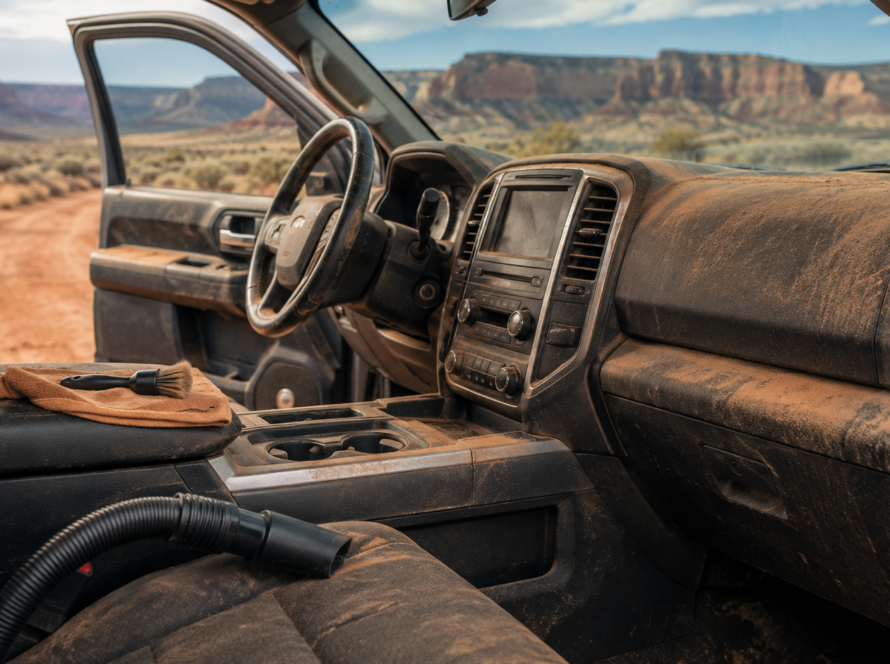
First, our red desert dust and dirt get everywhere — kicked up by the wind ahead of every storm, coating your vehicle in fine, abrasive grit. Then the rain comes and mixes with all that dust, turning it into a muddy film that streaks down your paint and dries into a crust.
On their own, either one is manageable. Together, they create a coating that’s both abrasive and stubborn, and that’s where the trouble starts.
Why Monsoon Rain Isn’t “Free Car Wash”
A lot of people assume a good rain does the work of washing their vehicle for them. In the Four Corners, the opposite is often true.
Rainwater isn’t clean. As rain falls through our dusty air, it picks up particles. By the time it hits your vehicle, it’s already carrying contamination. Then it mixes with the dust already on your paint and dries in place.
Our water is hard, and so is the runoff. When that rainwater and dust mixture dries on your vehicle — especially under the intense sun that follows a monsoon storm — it leaves behind mineral deposits and dried mud spots. Those water spots aren’t just ugly. Left on hot paint under our sun, the minerals can begin to etch into your clear coat, causing damage that a normal wash won’t remove.
So that “free car wash” actually leaves your vehicle dirtier and at risk of paint damage, not cleaner.
The Damage Monsoon Season Causes
Water spotting and etching. The big one. Dust-laden rain dries into mineral spots that, left untreated under the sun, etch into the clear coat.
Mud in the wrong places. Monsoon mud finds its way into wheel wells, under trim, into door jambs, and up under the vehicle. Left there, it holds moisture against metal and can accelerate corrosion over time.
Interior tracking. Wet, muddy shoes and gear get in and out of your vehicle all season. That mud grinds into carpets and floor mats, and moisture tracked inside can lead to musty odors and even mildew if it isn’t dealt with.
Undercarriage grime. The part of your vehicle nobody sees takes a beating during monsoon season, collecting mud and moisture that sit against components underneath.
How to Protect Your Vehicle This Monsoon Season
Don’t let mud and water sit. The single most important thing. After a storm, the sooner you get the dust-and-rain film off your vehicle, the less chance it has to etch or crust. If it dries on and bakes in the sun, it’s much harder to remove safely.
Never let it air dry. Whether it’s rain or a wash, letting water evaporate on your paint is what leaves the mineral spots behind. Dry it, or better yet, have protection on the paint that helps water bead and roll off.
Keep protection on your paint. This is where a wax, sealant, or ceramic coating earns its keep during monsoon season. A protective layer creates a barrier so mud and mineral-laden water can’t bond directly to your clear coat. Water beads up and rolls off instead of sheeting and drying in place, which dramatically cuts down on spotting. Ceramic coating in particular is a strong defense in our climate.
Clean out the interior regularly. Shake out and rinse your floor mats, and don’t let tracked-in mud sit in the carpet. Staying on top of it prevents the grinding-in and the musty smell that come with a wet season.
Don’t forget the hidden areas. Wheel wells, door jambs, and the undercarriage all collect monsoon grime. These are easy to overlook and exactly where moisture-related problems start.
Why Professional Detailing Makes Sense During Monsoon Season
Here’s the honest reality — properly removing monsoon grime without damaging your paint takes the right technique and products. Blasting dried mud off with a pressure washer at the wrong angle, or wiping abrasive dust off dry paint, does more harm than the mud itself.
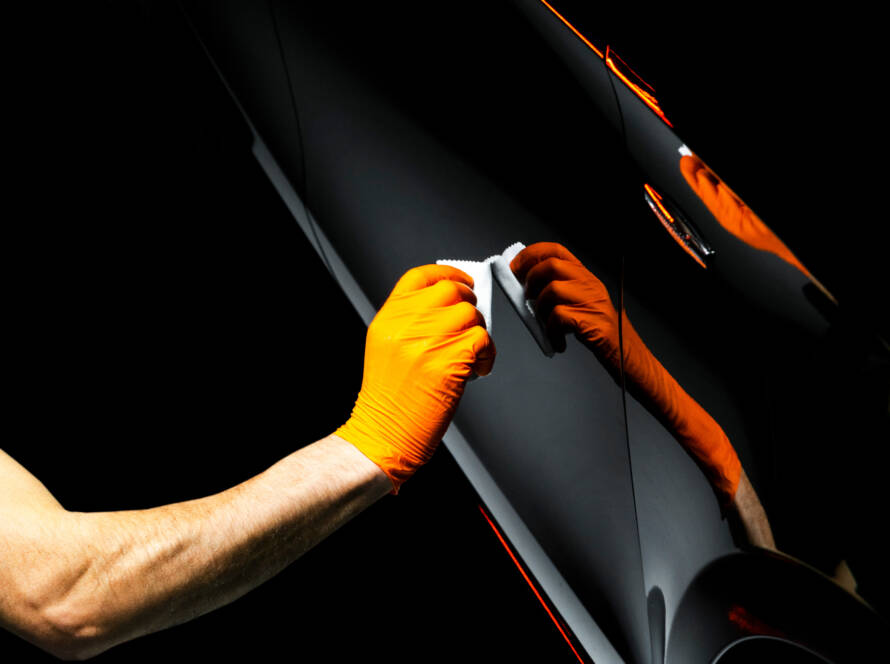
A professional detail handles the whole picture the right way. The proper wash technique lifts abrasive grit safely instead of grinding it in. Chemical decontamination removes mineral deposits and etching that a regular wash leaves behind. Wheel wells, jambs, and undercarriage get the attention they need. The interior gets deep cleaned so tracked-in mud and moisture don’t turn into odor and mildew. And a fresh coat of protection goes on to defend against the next storm.
And because it’s mobile, all of it happens right in your driveway — which is a real advantage when the weather is unpredictable and you’d rather not sit at a car wash waiting out a downpour.
The Bottom Line
Monsoon season is one of the best times of year in the Four Corners, but it’s genuinely tough on vehicles. The mix of red dust and dirty rain, our hard water, and the intense sun between storms creates the perfect conditions for water spotting, etching, and grime buildup where you can’t see it.
Don’t count on the rain to clean your vehicle — it does the opposite. Keep protection on your paint, don’t let mud and water sit, and stay on top of the interior. Do that, and your vehicle will come through monsoon season looking great instead of paying for it later.
Mudboy’s Mobile Detailing brings professional detailing right to your driveway in Farmington, Bloomfield, Aztec, Kirtland, and the surrounding Four Corners area. Cars, trucks, and SUVs — we come to you. [Book your detail today!]